There’s no shortage of fancy kit when it comes to skiing. From skis to custom-fit boots, the latest fabrics in the apparel you’ll need, advanced eyewear and everything else. But technology – digital technology – hasn’t been a huge feature for a typical skier. Carv burst onto the scene in 2017, but in 2024 launched the second-generation of its digital ski coach.
The first version of Carv used insoles loaded with sensors that you slipped into your boots, but the biggest change for the second version is that it now just consists of two sensor units that you attach to each boot. I’ve used both versions of Carv, but having tested the new version in November 2024, I’ve put Carv through its paces for another week in 2025.
Carv makes a lot of promises about what it will do for your skiing technique and after 5 days of tearing up the slopes in Obertauern, Austria, I’m more enthusiastic about Carv then ever. Let me explain.
The Disconnekt Downlow
Pros
+ Really can improve your technique
+ Real-time feedback
+ Unique proposition
Cons
– Some terminology can be confusing
– Not for beginners
– Limited sharing options
Carv is back and better than ever, with the second version of its digital ski coach. With simple installation, a detailed app and real-time feedback, Carv can guide you to improving your skiing turns, with the ultimate aim of getting you to smooth carving turns. It’s a great solution for skiers who feel like they have plateaued, who want to make progress, but don’t want to go back to ski school. The app is loaded with information, collecting data about every aspect of how you move through all parts of your turn. Highlighting areas of focus, coaching you with the gamification of these skills to make you a better skier. While there’s an ongoing cost to Carv, it’s a system that’s unique: not only is it really clever, coming from a company that’s passionate about skiing, but there’s nothing else like it.
What is Carv and how does it work?
Carv is unique, so before I talk about my experience skiing with it, lets talk about how it works. Carv consists of two units that you clip to your boots. These units contain loads of sensors, the battery and the hardware for a Bluetooth connection to your phone. The sensors have a USB-C charging port with a rubber seal, and a clip on the back so you can easily attach them to the strap on your ski boots – it only takes seconds to install.
Carv is controlled by the app on your phone, which plays a crucial part in the Carv experience. Through the app you can manage the connection, adjust settings, set the mode you want and view the data that you capture and find out what it all means – which I’ll come back to.


IMAGE CREDIT: CARV
The phone also lets you connect Bluetooth headphones, which allows Carv to give you real-time feedback. Yes, you can get feedback on every turn you make, summaries when you stop and more detailed guidance when you get on a lift.
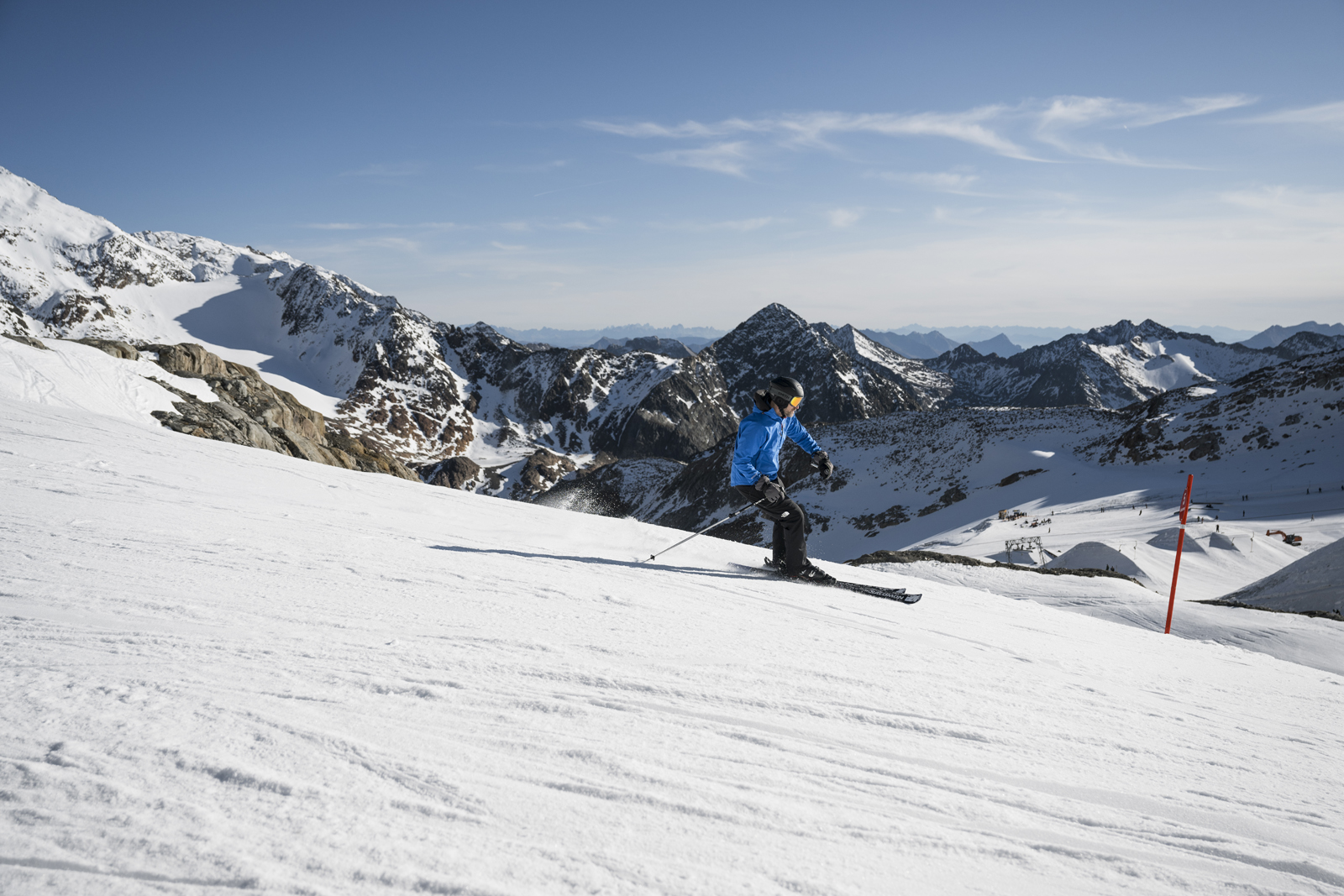
When you start a session in the app and start skiing, Carv captures everything, telling you what you’re doing right and where you can strengthen your technique. If you don’t understand anything, there are more details in the app, including videos. Little by little, Carv guides you to make tiny changes that can make a real difference to your turn. The aim is to be a super-smooth skier, carving up the slopes – and after another 5 days with Carv’s digital ski coach, I’m better than ever.
What is skiing with Carv like?
There are a number of modes in Carv, from free skiing, through to Active Coach, which will make ongoing assessments and give you tips to help you improve. Active Coach is talkative – whenever you pause, you’ll get a tip and feedback on how you’re doing. Setting out at the start of the week I had a big target – I needed to level up my Ski:IQ.
Ski:IQ is a single figure that Carv puts against your technique and helps you get a sense of how you’re progressing. I started the week on Ski:IQ 122. These Ski:IQ scores are categorised into bands, from Green Guru (level 1) up to Grim Ripper (level 7) – I was a level 4 – Carv Cadet. For context, I’m a good intermediate skier, consistent with parallel turns, under good control and I can ski most runs without too much bother.
But what I’ve never been able to do is carve. I had lots of lessons when I was younger (over 20 years ago) and I plateaued in a place I was happy with. Until now.
“
But what I’ve never been able to do is carve … Until now.
Carv’s sensors detect the precise movements of your boots, it knows how you’re shifting your weight around and what that means for your skis. Carv breaks down skiing into a number of skills – rotary, edging and balance – and the guidance you get focuses on skills within these areas.
You’ll be set a target as you ski and this is what you’re assessed against, with Carv usually rotating through those skills. In Active Coach, you’ll be assessed on every turn, with audible sounds indicating whether you’re doing it right or wrong. If you’re not hitting the target, you’ll get a slightly disappointing noise, but when you’re smashing it, you’ll get a more encouraging noise.
Just like training a dog, you’ll find yourself revelling in the positive feedback – and this is how you make progress. If you just want to ski without all the chatter in your ears (or you want to ditch the headphones for a bit which is totally understandable) then that’s fine, you can just free ski with no feedback – and the modes cover a range of options between comfortable silence and constant feedback.
Four fun facts about Carv
580
Million
Over 580 million turns have been recorded by Carv.
35k
Skiers
Over 35,000 skiers have used Carv to improve their technique.
34
Grammes
Each sensor weighs 34g, so that’s all you’re adding to your boots.
6
Axis
There’s a 6-axis motion sensor, with gyroscope and accelerometer in Carv 2.
What Carv taught me about my skiing
Having sampled Carv a few months earlier, I was determined to make real progress – and for me that meant getting a higher Ski:IQ and moving to the next category – Carv Connoisseur. Spoiler alert, I smashed it.
With Ski:IQ you have a single number in the back of your mind and each run is scored. Believe me, just an increase of 1 causes me to celebrate: I’ll scream, I’ll punch the air – it’s really quite out of character for me. It’s this gamification of skiing that’s the special sauce that Carv brings: hitting 123 was amazing, but can you imagine the ecstasy of hitting 125 and then going on to hit Ski:IQ 127 a few runs later? Cloud nine? You better believe it.


IMAGE CREDIT: CARV
But the most important thing isn’t what the app is telling me, it isn’t about what the technology is doing or anything else – it’s that you can feel when it’s right. That’s so important, because when you can feel it, you can do it again, and again, and again. I hit that score on day 4 and on day 5 I continued to get Ski:IQ ratings higher than the 122 I was on at the start of the week. I’m a better skier and Carv helped me get there.
Who is Carv actually for?
If you’re an absolute beginner, then Carv isn’t for you. If you’ve skied a couple of weeks, then I’d say it still isn’t for you – find an instructor and get some human coaching. But if like me, you feel that you’ve plateaued and don’t want to spend your holiday in ski lessons, then Carv is for you.
Yes, being a nerd helps. I’m a massive data nerd. I have sensors on my road bike, I wear a Fitbit and a Garmin, I’m all-in on tracking activities. That’s one thing that I think is missing from Carv – the lack of sharing with other apps. The lack of sharing full stop. I’d love to be able to share my achievement from the Carv app, but I can’t. I’d love for data to make it into Strava along with all my other sports data – but I can’t. It will sync with Apple Health, but that’s it.

IMAGE CREDIT: CARV
I’d bet that most people interested in Carv will also be wearing a device like a Garmin – or an Apple Watch – that could provide heart rate data. While that won’t help your skiing, I’d just love to know how hard I’m working, like all other activities I do.
But Carv isn’t really about tracking your sport, it’s about coaching you to be a better skier. That you have metrics for where you skied, how many turns you made, the speed you achieve – as well as the detailed breakdown of how good each turn was – just adds to the fun.
This all sounds great, is Carv expensive?
Do you know how much a lift pass costs? Skiing is expensive, from equipment hire to resort accommodation, skiing is inhibitively expensive at times. Carv has two pricing models: the first is an annual subscription at £199 / $249 per year. This gets you the sensors and year-round access to the service.
The second approach is cheaper and better suits how many people ski. This lets you buy the sensors for £99 / $129 and then you pay £99 / $119 a year for access to the service. This gets you a 6 Day Pass. If you’re the sort of person who only skis for a week every year, then this is the option you want.
There’s no denying that Carv is pretty expensive, an ongoing cost. But once you get over the initial outlay, adding £99 to the cost of a skiing holiday is nothing. That’s about the price of a 1-hour private lesson in many resorts.


IMAGE CREDIT: CARV
Should I buy Carv 2?
If you’re an intermediate skier who loves the sport, but feel like you’re not making any progress, then Carv is a great option for you. It’s not really suitable for beginners and if you don’t want to invest your time into figuring out what Carv is asking of you or you’re not interested in the data it spits out, then arguably, you’re not the target audience.
If you’re a regular skier, you’ve been looking for some way to refine your ski turns but don’t want to commit to more lessons or losing time skiing with family and friends, then Carv can help you improve. I was happy to ski at the level I already had, but now I’ve seen improvements through Carv, I’m even more excited about where my skiing will take me in the future.

IMAGE CREDIT: CARV
FAQs
Ski:IQ is a single figure that gives you a sense of your overall ability. It takes into account the type of surface you’re skiing on and you’ll get best Ski:IQ scores types of slope (i.e: blue, red, black). Ski:IQ bands are grouped into categories so you have a better idea of how good you are as a skier overall.
Yes, Motion Metrics (the company behind Carv) tells me that the new sensors give better data than the pressure sensors of the original system. On top of that, installation is much easier, so for those renting boots, it’s literally just a couple of seconds to clip the sensors onto your boots and off you go.
My personal experience is that Carv 2 can be effective in highlighting improvement areas in your skiing technique and helping you focus on them. When I used the original Carv, this advice tallied with advice I got from an instructor. Skiing with Carv 2 on a family holiday, I made good progress in my turns, resulting in smoother turns.