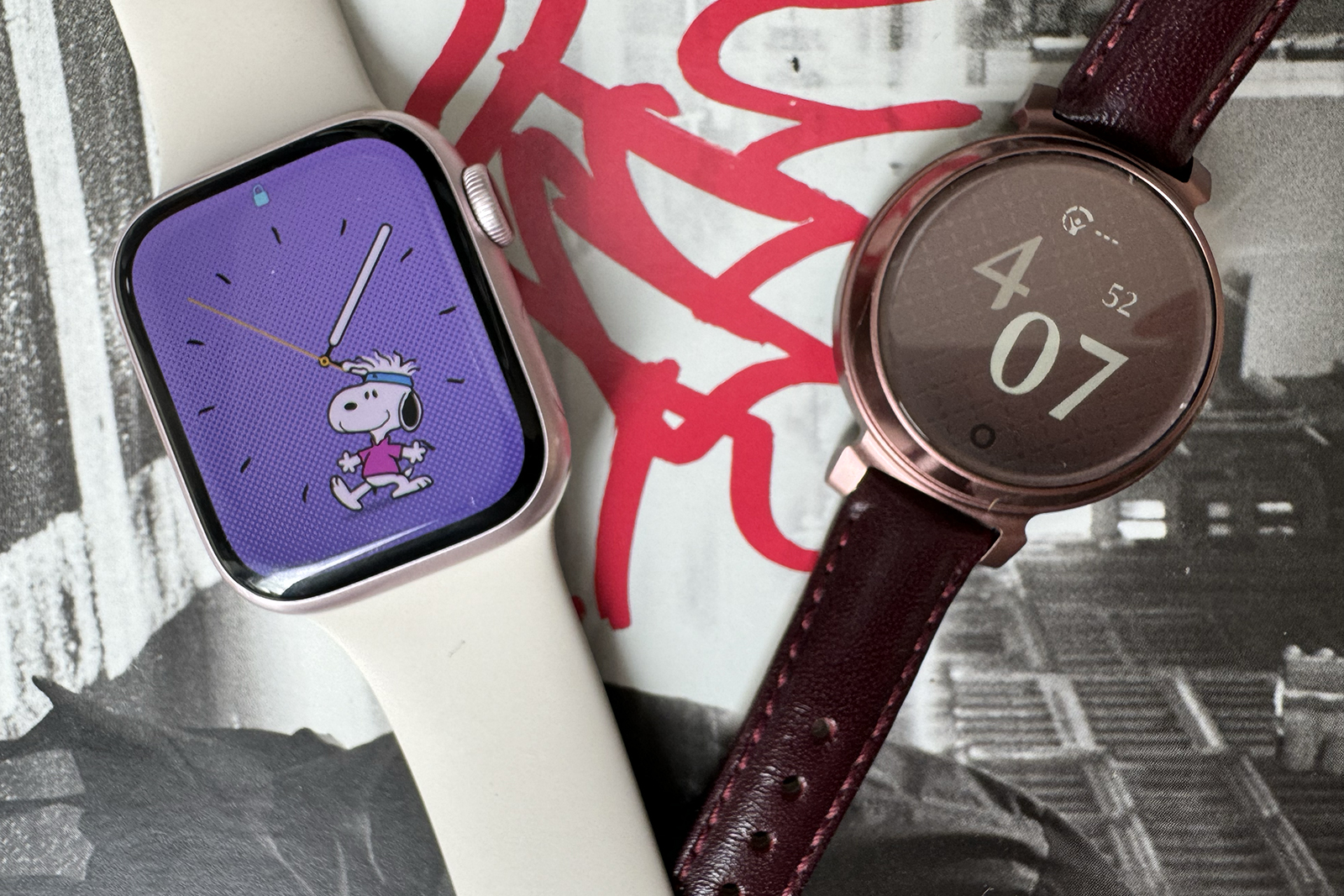
I’ve had the Garmin Lily 2 on my wrist for the last month, while the Apple Watch Series 9 has remained on my other one. I can’t bring myself to take the Apple Watch off because, well I love it, and I’ve been wearing Apple Watch since 2015 so call me a creature of habit but I’m still going to be closing my Rings for the rest of the year.
With all that said, I did think I’d be taking the Garmin Lily 2 off much quicker than I have. Instead, I’m walking around with two smartwatches on my arms, looking a bit ridiculous. Why? Because Garmin has three features I can’t get on my Apple Watch and I’m hooked on them.
Body Battery
Garmin’s Body Battery was first introduced on its top-of-the-range models, like the Fenix, but over the years it’s filtered down to most of its devices, the Lily included. It was on the original Lily from 2021 and it’s on the Lily 2 model too. Body Battery does pretty much exactly what it says on the tin – monitor your energy levels based on how much you rest throughout the day and night to give you a score out of 100.

IMAGE CREDIT: THE DISCONNEKT
This usually depletes throughout the day but it’s not necessarily high intensity workouts that see it go down as you might expect. In fact, workouts don’t affect it much at all. Instead, it’s high stress and low rest that will see it go down faster – or more accurately, high heart rate without your body physically moving.
“
Getting back up to the 100 mark on Body Battery has now become an addiction – and seemingly an impossibility.
Couple that with a bad night’s sleep and you’re looking at being at close to zero by the end of the day. I say close to zero because it doesn’t actually drop below five, I guess because that would suggest you’re not alive anymore. Your body won’t technically deplete entirely if you’re still alive after all. I got to five several times in the last month, a mixture of some bad night’s sleep and being ill, plus a couple of stressful days, and getting back up to the 100 mark on Body Battery has now become an addiction – and seemingly an impossibility.
And there lies reason numero uno. Apple Watch collects the same data that Garmin collects for Body Battery but Apple Watch doesn’t have a similar readiness feature. Not yet anyway. Here’s hoping for something in watchOS 11, which will be announced at WWDC in June.
Stress tracking
Stress tracking is the second feature my left wrist envies my right wrist for. You can add how you’re feeling to Apple Watch and it made some great changes to mental health with watchOS 10, but stress isn’t something Apple focuses on as a individual metric.
Both Garmin and Fitbit offer stress tracking on their devices and with Garmin it’s really interesting data. Distinguishing the various stages of stress as rest, low, medium or high, you get an overall score for the day based on how often you were in each of those zones. If you haven’t sat down much, a little note appears in the Garmin app telling you that you could do with slowing down.

IMAGE CREDIT: THE DISCONNEKT
Get a good night’s sleep and don’t do too much during your day and your stress score will be low. Head into London for the day when you normally work from home and the circle will be at least half red and that will directly correlate to your Body Battery score. It’s a great feature and one that’s perfect for giving you an indication of how your body is responding to what you’re doing. It’s also excellent for reminding you to slow down and give yourself a minute. Sure, thanks, if only it could let my kids know that too.
Hydration
The final feature I’d love to see my Apple Watch take some inspiration from Garmin is hydration tracking. This requires more user input than the other two features above, which just require you to wear the device day and night. For hydration, you need to manually add how much water you have consumed each day – something third party apps can do on Apple Watch so that’s nothing groundbreaking.

IMAGE CREDIT: THE DISCONNEKT
Where Garmin is clever is that it uses the data it has collected from you that day to adapt your daily hydration goal. On a typical day where you haven’t done a workout for example, your daily water goal might be 1500ml. This will increase if you do a workout, giving you a guide as to how much you need to drink to rehydrate your body. It’s simple but it’s very helpful as a day-to-day feature. I still don’t drink enough water, of course, but at least it tries to encourage me!