Samsung has announced the Galaxy S26 family of phones, with the Galaxy S26 Ultra taking its customary place as the flagship of the trio. With Samsung switching its messaging to this being an “AI phone”, there’s only really one new thing to be excited about.
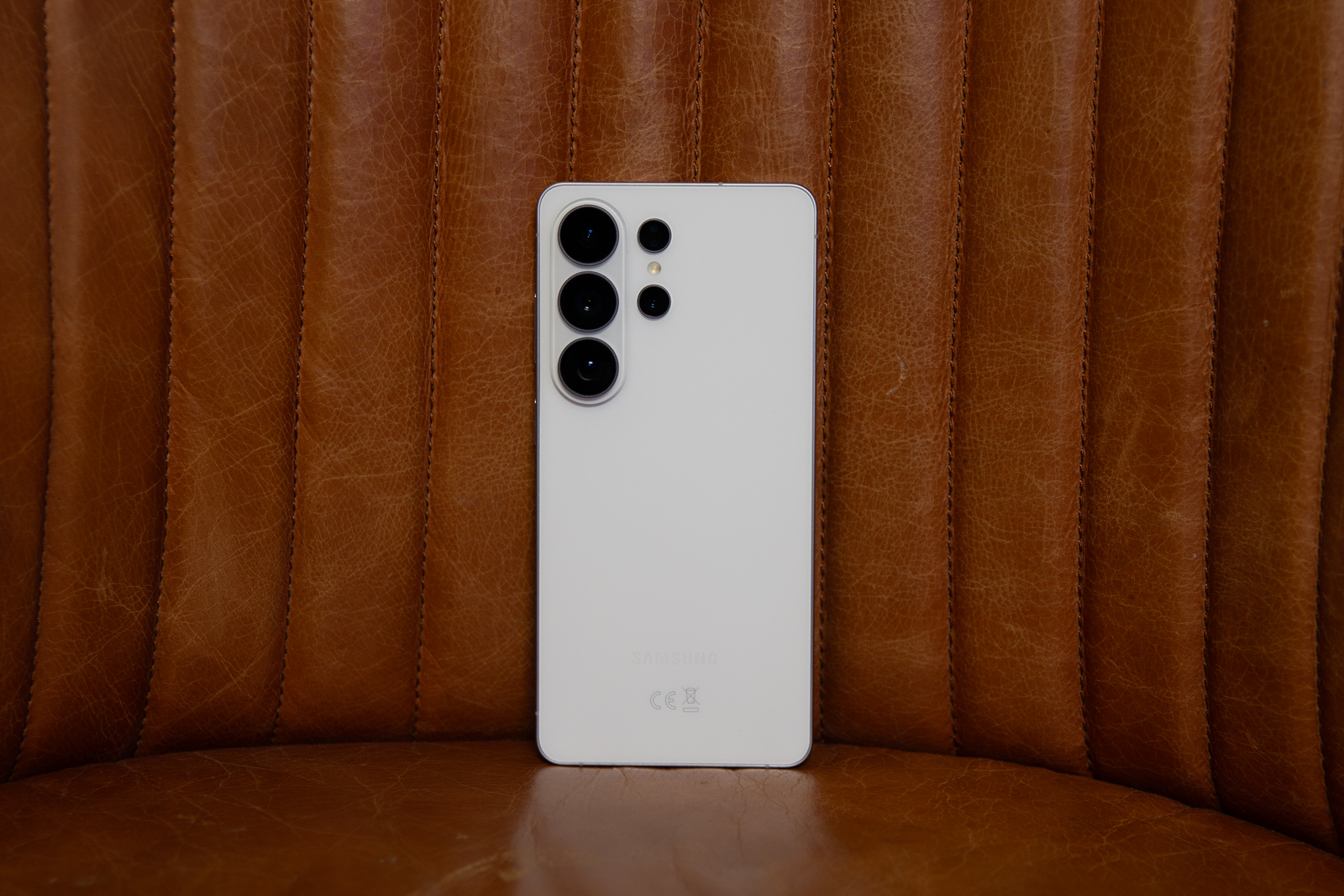
Samsung’s Galaxy S Ultra has been walking a familiar path for the past few years. In 2026, buyers will be rewarded with a phone that looks a little better thanks to the refinement in the corners, but doesn’t feel any thinner or lighter.
Samsung say that this is the thinnest Galaxy S Ultra so far, but when handling the Galaxy S26 Ultra alongside the Galaxy S25 Ultra, I didn’t find there was much of a difference – it’s 7.9mm thick, whereas before it was 8.2mm.
Indeed, the camera module on the new unit looks larger now that it’s on an island, rather than just having the lenses on the rear of the phone as was the case before.


IMAGE CREDIT: THE DISCONNEKT
The S Pen is still present, tucked into the corner, but I found the button (the top) of the pen protruded more than it has done on the last two Ultra devices. I’ve lost S Pens in the past and I suspect this design will lead to that button getting knocked and that S Pen poking out when it’s not supposed to.
Compared to the Galaxy S24 Ultra, the Galaxy S26 is a big change. If you’re still using the 2024 phone, moving to the Galaxy S26 Ultra will feel like an upgrade – although even from that two-year-old model, there’s one thing that people will be talking about.
Samsung flexes the tech with Privacy Display
Making its debut on the Samsung Galaxy S26 Ultra is a world-first feature: Privacy Display. This option has existed as an add-on layer for phones in the past, but Samsung’s new approach offers a lot more flexibility.
The ability to limit visible viewing to just in front of the display will make it easy to restrict who can see what. That person sitting next to you on the train, or behind you in a queue, won’t be able to make out details on your screen.

IMAGE CREDIT: THE DISCONNEKT
The option can be toggled on and off with the tap of a button, so you can easily turn it on and off as needed. It’s really clever, easy to use and I found it really effective.
Whether that’s sensitive information from work – like top secret documents or financial information – you’ll be able to keep this from prying eyes. You could also scroll through your social feed without others knowing exactly what you’re looking at. If you have a fetish for model aircraft, you can now keep that dirty little secret to yourself.
What’s clever about Privacy Display is that it can be customised so particular apps are obscured from wider view while others aren’t. At a surface level that’s great, because you can obscure banking apps for example, but not Netflix, where the reduced viewing angles of Privacy Display could be inconvenient when watching.
Privacy Display can also include notifications, meaning those notifications that pop-up revealing all your secrets, can now be hidden. Therein lies the problem: what exactly are you hiding?
Anyone who obscures messaging apps will probably fall foul of the fact that in choosing to make those messages private will arouse suspicion. There’s going to be an interesting social dynamic around Privacy Display and how and when it’s used, just like when Apple Watch was launched and people soon tired of their dinner date checking their watch every time it binged or booped.


IMAGE CREDIT: THE DISCONNEKT
The rest of the Galaxy S26 specs
The Samsung Galaxy S26 Ultra is powered by the Snapdragon 8 Elite Gen 5 for Galaxy, while the S26 and S26 Plus models in the UK and Europe get Exynos 2600. Interestingly, the Exynos is 2nm hardware, so a generation ahead of Snapdragon’s 3nm – it will be interesting to see which yields a better experience. There is a larger vapour chamber in the Ultra, however, which gives it a cooling advantage.
The screen increases to 6.9-inches, with a new mDNIe chip for 10-bit processing that’s said to bring four times more colour to the display. It certainly looked great when it used it.
The battery sticks to 5,000mAh, seeing no increase over previous years. While charging gets a very welcome bump to 60W – with 25W Qi2.2 charging supported (but with no magnets in the phone) – the capacity is well behind some of its rivals.
The camera too remains much as it was before, with a 200-megapixel main camera, now with a new lens that offers an f/1.4 aperture. The aim is to let in more light for even better low light photos, something I’ll be keen to test. Two telephotos and an ultrawide make up the comprehensive camera system, just as it has done before.
Let’s talk about the AI Phone thing
Samsung is marketing the Galaxy S26 Ultra as an AI Phone. Samsung’s Galaxy AI continues to be a talking point, but sits in the phone in parallel with Google’s own Gemini. Bixby (yes, Bixby still exists) gets an AI bump, with Samsung suggesting you can talk to Bixby in natural language to find things like settings on your phone.
Elsewhere the AI offering continues to be unimaginative: you can create images, you can alter images, you can make stickers from images. You can do generative stuff that is probably a one-time novelty, but definitely falls into the category of AI slop.

IMAGE CREDIT: THE DISCONNEKT
What’s missing from the AI side of this AI phone is anything that feels like it’s really going to make a difference. Well, from Samsung at least, where most of its AI features are limited to its own apps. Google seems to be putting forward a much better case for AI through Gemini and Google apps and if nothing else, you have all that functionality here.
While AI is definitely the buzzword of the moment, branding the S26 Ultra as an AI Phone could run into the popular backlash against AI. Fortunately, as we’ve seen in the past, it’s easy to ignore all the AI features and just enjoy a premium phone, with great features.
There’s no doubting that the Samsung Galaxy S26 Ultra will be one of the best smartphones of the year and we’ll bring you a full review as soon as we can.
The Samsung Galaxy S26 Ultra will start from £1,279.