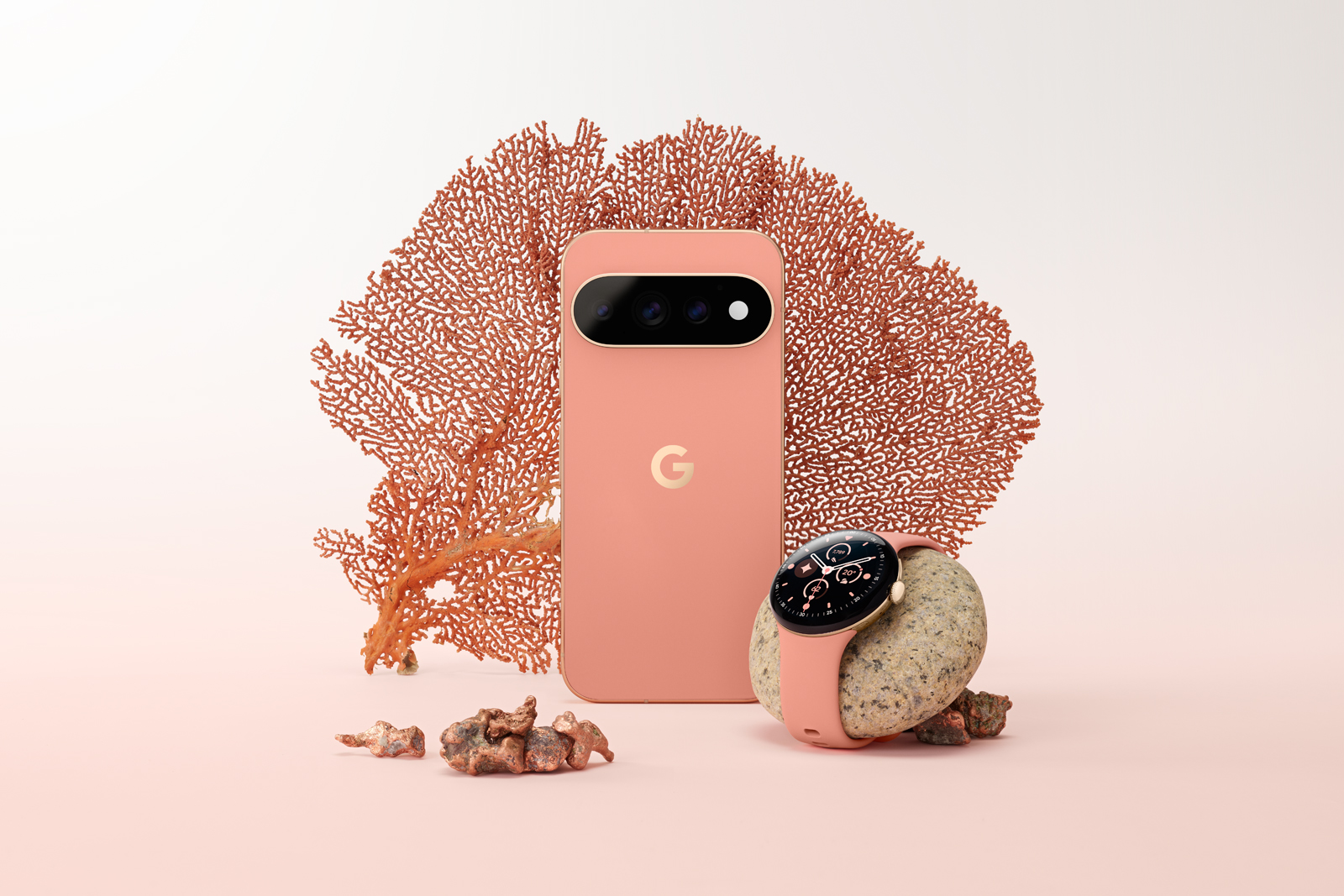
The new Pixel 11 phones come with a lift to the design, new camera features and a more powerful chip, but they also land with one confusing new feature. Google, on introducing the new feature called HiLight, says that it “will keep you connected, not distracted, when your phone is face down”.
Google isn’t the first to do this sort of thing. Back in the good old days, your BlackBerry would wink it’s LED at you whenever you had a message. Of course, in those days, getting an email that you could read on the move was big news. There was no escaping the notifications but in 2005, you didn’t want to.
Now we do – though to make sure that there’s no escape Google has added a coloured LED to the flash array of the camera on the back, which can sparkle in colours to tell you that your phone wants attention.
You can already set custom ringtones, you probably already have a smartwatch, you might have vibrate turned on; I don’t think anyone is missing important things happening on their phone, but Google wants to drag you back to your phone even when you can’t see the screen.
“
HiLight will gently glow to notify you of timely, glanceable information. For example, when you prompt Gemini, it will glow in different patterns to signal that it’s listening, thinking, or responding.
Ah, Gemini, of course.
Tensor G6 underlines the next Gemini experience
Powering the new generation of Pixel phones is a chip called Tensor G6. While the CPU is 25 per cent faster and app launches will be 15% faster, the big gains come for Gemini: it has 50 per cent more TPU compute, meaning that on-device operations can run 3.5x faster, while using 3.5x less energy.

IMAGE CREDIT: GOOGLE
That’s thanks in part to the new 2nm process that the chip sits on, but it’s also a nod to what Google wants to boost.
While all the new Pixel models benefit from this – Pixel 11, Pixel 11 Pro (and Pro XL) and Pixel 11 Pro Fold – it’s the camera updates that are really going to sell this phone. After all, something has to power that new camera experience and it’s a lot easier to sell someone a better camera than it is to sell someone an AI experience.
Pixel 11 boasts new zoom skills and faster Night Sight
The Pixel 11 comes with a new 48-megapixel main sensor for better light capture, while the 5x telephoto lens will now offer 30x Super Zoom where previously it was limited to 20x.
The Pixel 11 Pro, however, gets a new main camera sensor, while the telephoto is new too. The new zoom has a 30 per cent larger sensor which will boost the ability to capture light. The digital zoom range is also extended to 120x with Pro Zoom, again thanks to processing from the Tensor G6.

IMAGE CREDIT: THE DISCONNEKT
The chip is said to have a new ISP – image signal processor – which combined with new software, speeds up things like Night Sight to make it 4.5x faster than on previous phones. That should make for instant night shooting.
The new chip will also power something called Magic Capture. This is designed to capture what’s in front of you without you doing anything – it results in images and videos that will be automatically cropped and tweaked to remove blur. Definitely something to try out.
Google is also adding a Teleprompter, to help you stick to the script on all that content you’re making: just like Recorder (which was a godsend for journalists), Teleprompter appears to speak right to the audience that Google wants to impress. I’m expecting influencers to go wild about it.
Brighter screens, faster charging and more storage
While the headlines will be taken by new AI skills (we’re going to see Gemini Intelligence come to the fore in the Pixel 11) and the camera, there’s a full set of useful upgrades in these phones.
While the design stays much the same, the camera bump on the Pixel 11 has been slimmed down, and it’s now glass right across the front, rather than transitioning into metal part way along.
The phones are slimmer at 7.6mm and lighter across the board. There’s little change to the battery capacities, although Google is promising longer life: charging is now faster, with support for 25W wireless charging too. The Pro screens are a little brighter, too.


IMAGE CREDIT: GOOGLE
Storage all starts at 256GB – which accounts for slightly higher starting prices with the loss of the 128GB options. Google has kept the prices pretty much under control, but the Pro models only come with 6 months of Google AI Pro – previously they offered 12 months – so if you’re not careful, there could be a big subscription hit here – Google AI Pro is £18.99 a month.
The Pixel 11 will start at £879 in the UK (£20 cheaper than the equivalent Pixel 10 256GB), the Pixel 11 Pro will start at £1,079 (£20 cheaper than the equivalent Pixel 10 Pro 256GB), and the Pixel 11 Pro XL will start at £1,279 (£80 more expensive than the equivalent Pixel 10 Pro XL).
The Pixel 11 Pro Fold, also launched from £1,799 (£50 more than before), while offering a new camera design, a thinner and lighter build, with a stronger hinge, brighter screens and a new main camera.