Samsung has been busy this month, revealing not only its new foldable phones in the Galaxy Z Flip 6 and Galaxy Fold 6, but the Galaxy Ring, two new smartwatches and some new wireless headphones that take a big fat leaf out of the AirPods playbook.
The Galaxy Watch 7 is an update to the Galaxy Watch 6 so it doesn’t come as a huge surprise, but the Galaxy Watch Ultra is a step in a different direction. Apple did it when it introduced the Apple Watch Ultra in 2022, offering a more rugged smartwatch for those who like a bit of adventure and now Samsung is following suit.
What I find most exciting about Samsung’s latest wearables isn’t the Hermès-style design of the Galaxy Ultra, or the move to capitalise on smart rings and one of this summer’s hottest trends thanks to Gareth Southgate. Instead, it’s the features on offer that I find exciting and, more specifically, Energy Score.
Let’s talk about Energy Score a little more…
When I first learnt about Energy Score, I thought it was Samsung’s crack at Garmin’s Body Battery feature and in some ways it is. But on further investigation, as well as talking to Hon Pak, Samsung’s SVP and Head of Digital Health, on behalf of British GQ at Unpacked in Paris, I learnt some extra details that make it quite different.
Pak said Energy Score “takes activity over the last day, sleep over the last seven days, sleeping heart rate on average and then sleeping heart rate variability” to calculate your Energy Score for that day. That’s not too dissimilar to Garmin that uses heart rate variability, stress level, sleep quality and activity data to determine overall Body Battery level. But Garmin shows your Body Battery depletion throughout the day and Energy Score is just a one-score-per-day situation.


IMAGE CREDIT: THE DISCONNEKT
Samsung’s Energy Score is out of 100, like Garmin’s Body Battery, but with Garmin’s option, as the day progresses it will drop down to as low as 5 and then it becomes a bit of a game to try and get it back up to 100 (basically impossible – I have tried). Energy Score meanwhile, gives you that one score out of 100 in the morning to help you figure out if you are well rested or you need a duvet day, and the next time you get a score will be the following morning.
It is enhanced by Galaxy AI already, but is likely to expand over time, tapping further into artificial intelligence to offer more insights into the various factors that might impact your physical wellbeing. Pak said during the interview that this was “version 1.0” of Energy Score and he believes “there’s a lot more we can do and should do” and it will get “better and better”.
“
You wake up in the morning and you get an energy score. What that means is we estimate what your capacity is for that day.
Hon Pak, SVP and Head of Digital Health at Samsung
Energy Score isn’t just coming to Galaxy Ring, Galaxy Watch 7 and Galaxy Watch Ultra, but some older Samsung wearables will also support it. These include the following:
- Samsung Galaxy Watch 6
- Samsung Galaxy Watch 6 Pro
- Samsung Galaxy Watch 6 Classic
- Samsung Galaxy Watch 5 Pro
- Samsung Galaxy Watch 5
- Samsung Galaxy Watch 4
- Samsung Galaxy Watch FE
What do the Galaxy Watch 7 and Galaxy Watch Ultra offer?
Many of the features offered by the Samsung Galaxy Watch 7 and Galaxy Watch Ultra are coming to the Galaxy Ring too, and I don’t just mean Energy Score. Sleep Score is also included in that, along with Wellness Tips, heart rate monitoring, cycle tracking and automatic workout detection. If you wear the Galaxy Ring and Galaxy Watch 7 or Galaxy Watch Ultra together, you get an extra 30 per cent battery life from the Ring too, which is handy.


IMAGE CREDIT: THE DISCONNEKT
The Galaxy Watch models bring a few extras of course – they are bigger devices so more of those juicy sensors can squish in, including blood pressure monitoring in Europe. Both run on WearOS 5 and they both feature a 3nm processor under the hood, along with an enhanced BioActive Sensor.
The Galaxy Watch 7 is a more typical looking smartwatch, while the Galaxy Watch Ultra has a squircle shape (I can’t believe that’s actually a word), taking cues from some of the luxury watches out there including the Hermès’ H08, Patek Phillippe’s Nautilus and Bell & Ross BR 05. Just Google them if watches aren’t your thing and you’ll see what I mean.
Using Galaxy AI, the two smartwatches will suggest replies based on your previous conversations, while Double Pinch Gestures will let you control the Galaxy Watch and a connected Galaxy phone using a pinch of your index finger and thumb. That gesture will let you stop an alarm, answer a call, take a picture or play and pause music. It takes things a little further than the Double Tap gesture on the Apple Watch Series 9 and that remains true even though watchOS 11 is expanding this feature on Apple Watch.


IMAGE CREDIT: THE DISCONNEKT
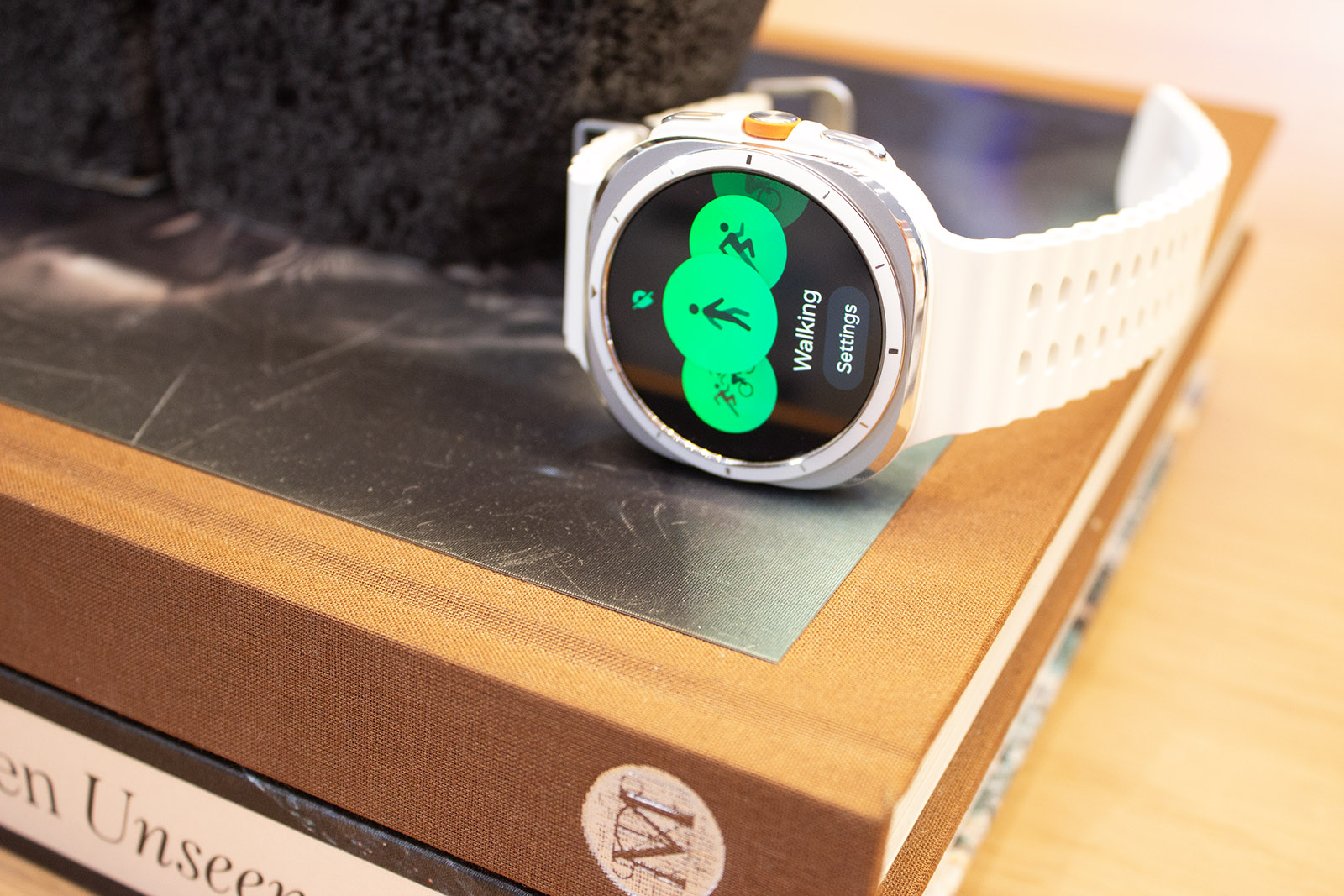
The Galaxy Watch Ultra goes directly after Apple’s Watch Ultra and it’s not trying to shy away from that. There’s a titanium build, 10ATM water resistance, a customisable quick button and support for extreme temperatures. You’ll also find a 3,000 nits brightness (same as Apple Watch Ultra 2), a night mode watch face and it can withstand altitudes from -500 metres to 9,000 metres in case you fancy a short stroll up Everest.
You can also race against yourself on a familiar route – just like you can on the Apple Watch Ultra 2, and functional threshold power is also supported for cyclists. Where Samsung does offer something extra over Apple Watch Ultra 2 is the multi-sports tile where you can track multiple workouts from swimming, running and cycling rather than having to do them separately.
How much will Samsung’s Galaxy Watch 7 and Galaxy Watch Ultra cost?
The Samsung Galaxy Watch 7 and Galaxy Watch Ultra will both be available to buy on 24 July. You can already pre-order them. The Galaxy Watch 7 comes in 42mm and 44mm models with the former available in green and cream colour options and the latter in green and silver. The Galaxy Watch Ultra has a 47mm casing and comes in Titanium Grey, Titanium White and Titanium Silver.
In terms of price, the Galaxy Watch 7 40mm starts at £289, with the 44mm model starting at £319. The Galaxy Watch Ultra costs £599.